Santorini Island:
The Ultimate Guide to Food, Views & Local Vibes

The Ultimate Guide to Food, Views & Local Vibes

Oia Village is Santorini’s crown jewel — a cliffside paradise of whitewashed houses, blue-domed churches, and breathtaking caldera views that seem to hang over the deep blue Aegean Sea. Famous worldwide for its unforgettable sunsets, charming alleyways, and stylish boutiques, Oia captivates travelers with its timeless beauty and romantic atmosphere.

Red Beach in Santorini is one of the island’s most iconic natural wonders, where dramatic red volcanic cliffs meet crystal-clear deep blue Aegean waters, creating a landscape unlike anywhere else. Nestled near Akrotiri, the striking contrast of red sand and rugged rocks makes it a photographer’s paradise and must-visit spot for beach lovers and explorers alike.

Imerovigli is a serene cliffside village in Santorini offering panoramic caldera views, charming whitewashed alleys, and unforgettable sunsets without the crowds. Walk to the dramatic Skaros Rock for spectacular panoramas, wander past blue-domed churches and boutique cafés, or explore scenic coastal trails that connect to Fira and Oia.
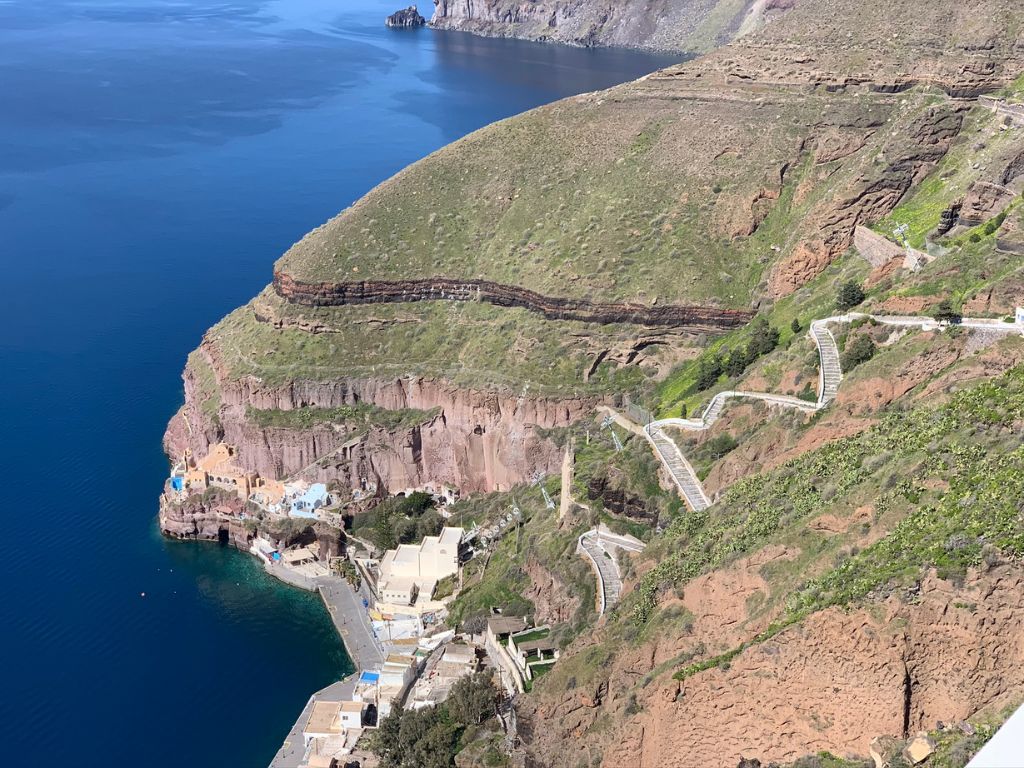
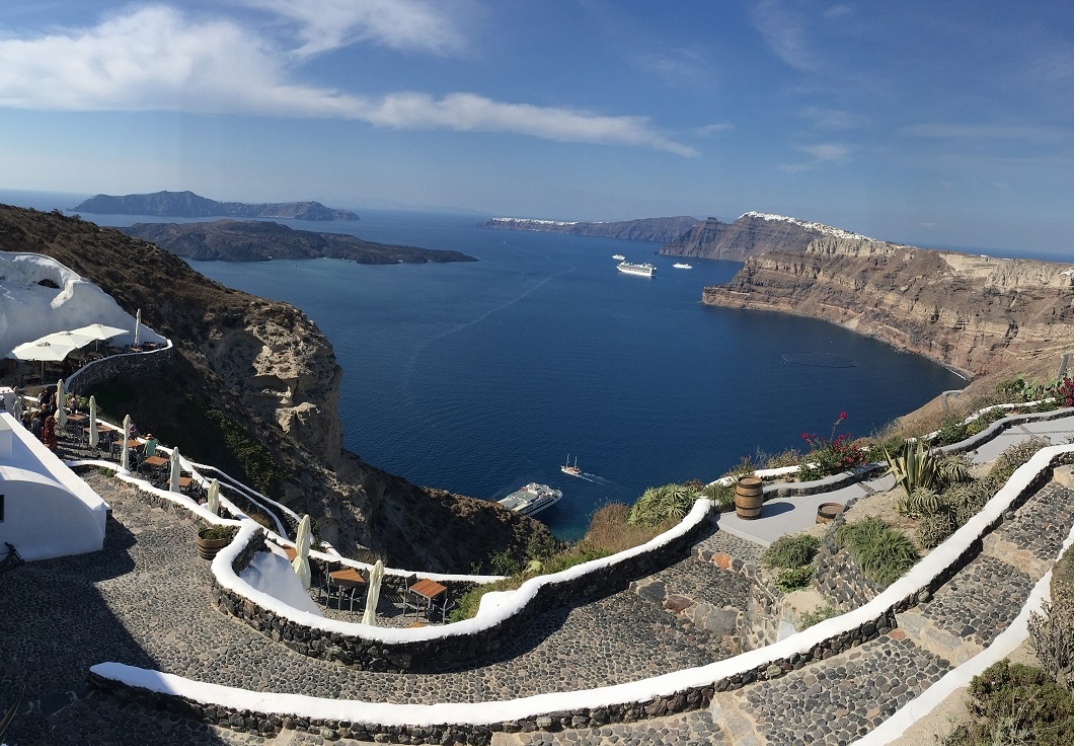
The Old Port of Santorini lies below Fira at the base of the caldera cliffs, offering a dramatic first impression of the island from the sea. Once the island’s main harbor, it is now a lively stop for cruise tenders, small boats, and local excursions. Visitors can reach the port by cable car, donkey path, or on foot, enjoying stunning caldera views along the way.
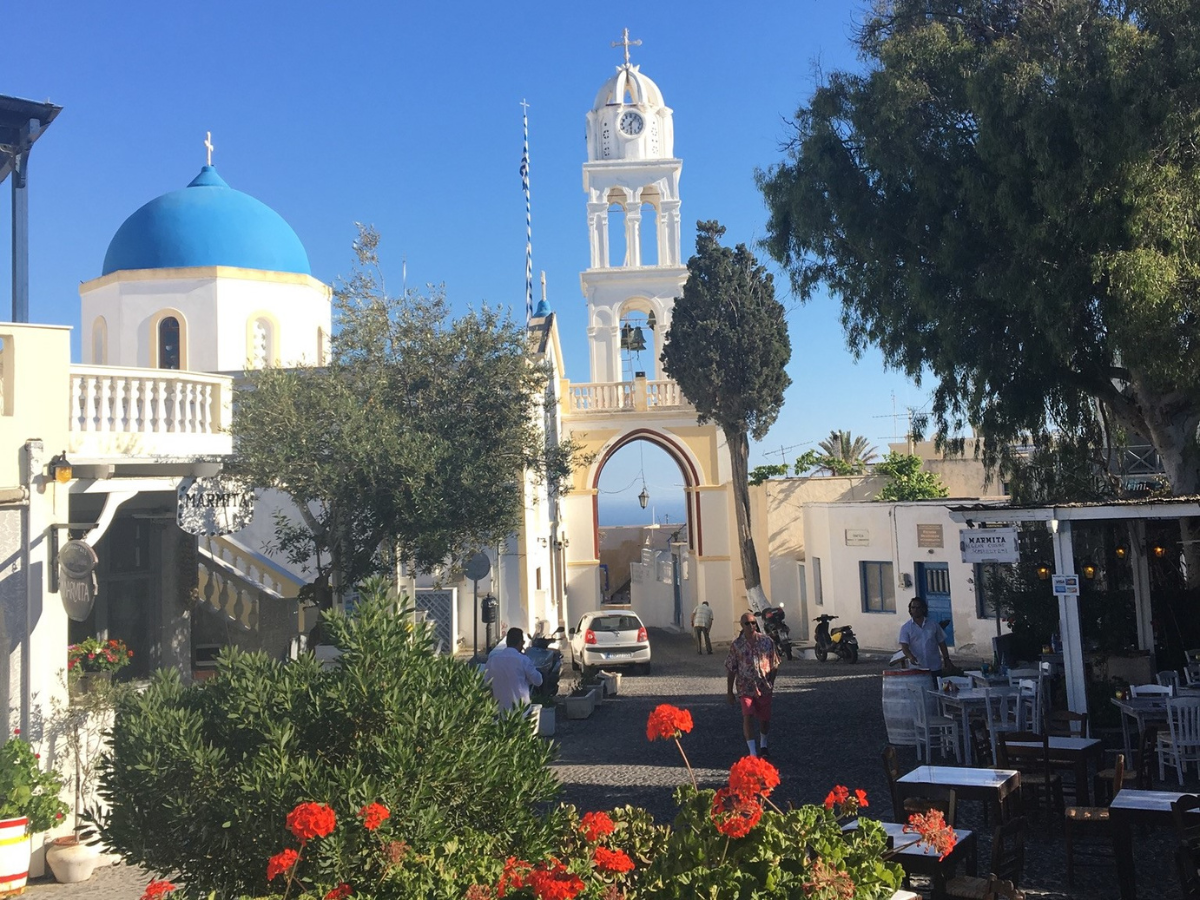
Megalochori is a charming traditional village in the heart of Santorini, where winding cobblestone streets, white-washed houses, and classic bell towers create a peaceful, timeless atmosphere away from the busier towns. Surrounded by lush vineyards and historic wineries, it’s a perfect place to savor volcanic wines, explore hidden courtyards, and enjoy authentic island life.
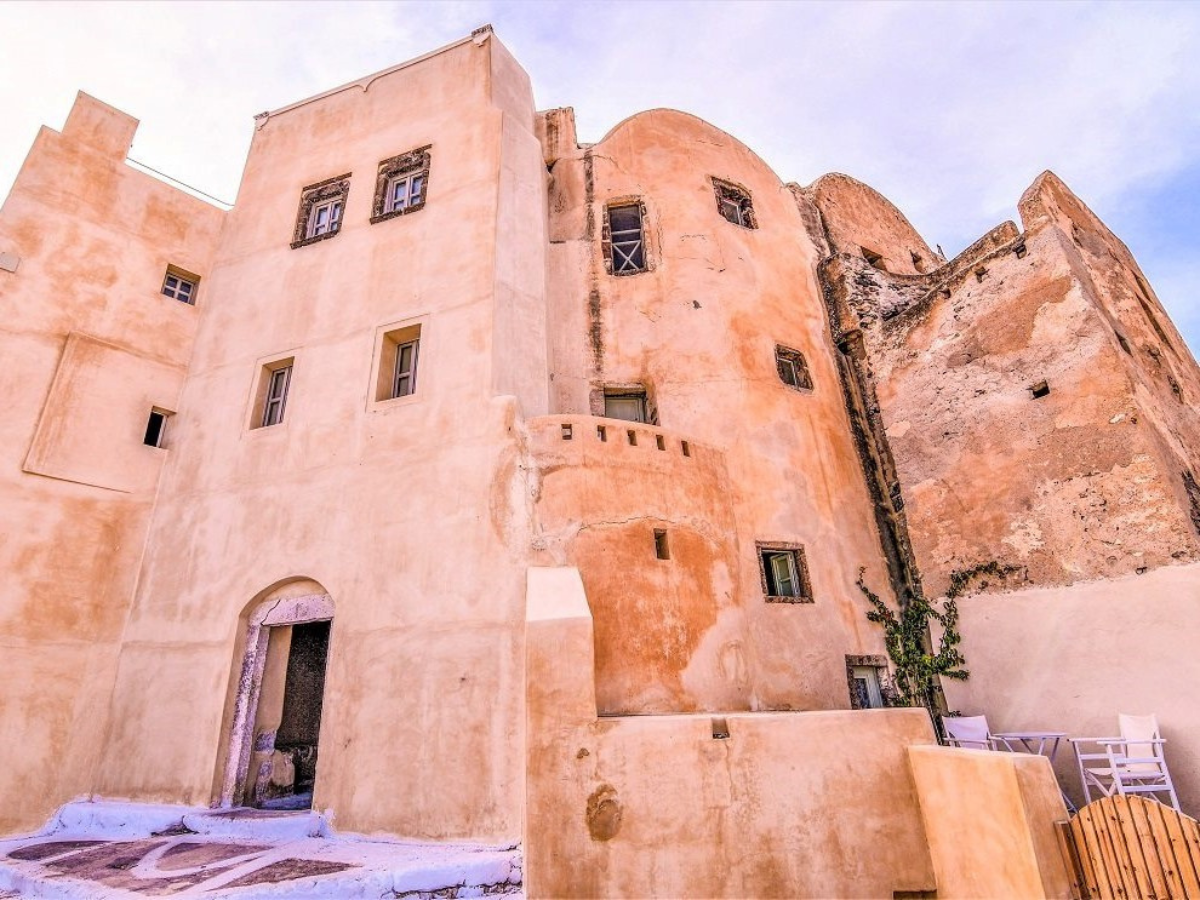
The Castelli of Emporio is Santorini’s largest medieval fortified settlement, built to protect locals from pirate attacks and invasions. Its maze-like alleys, stone towers, and narrow passages create a fascinating journey through the island’s Venetian past. Perched above the village of Emporio, the castle offers a glimpse into traditional defensive architecture and authentic Santorini history.
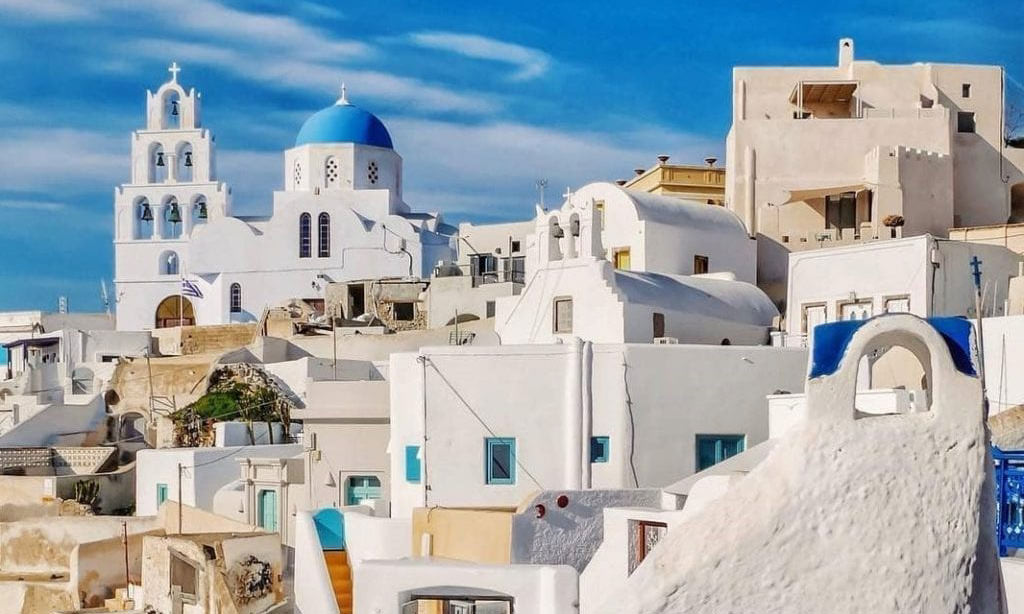
Perched on one of Santorini’s highest hills, this charming village unfolds like a storybook of whitewashed homes, winding alleys, and panoramic views of vineyards and sea. Wander through timeless streets lined with classic chapels, traditional tavernas, and artisan shops, then catch unforgettable sunsets from the old castle ruins above.
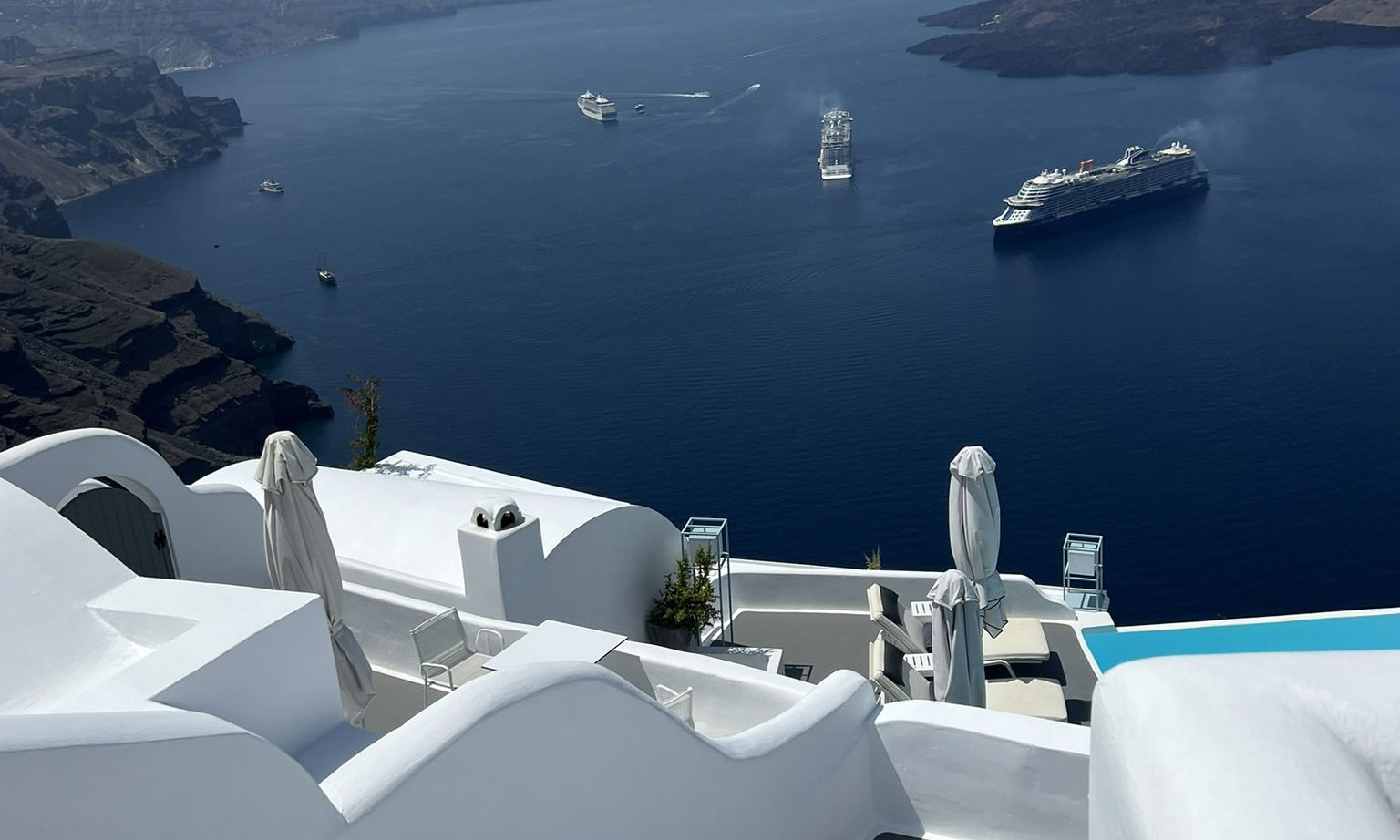
Visiting Santorini during a cruise stop or short stay requires planning, as time on the island is often limited. Many travelers choose structured routes that include caldera viewpoints, traditional villages, and key landmarks, while others prefer to explore independently at their own pace.
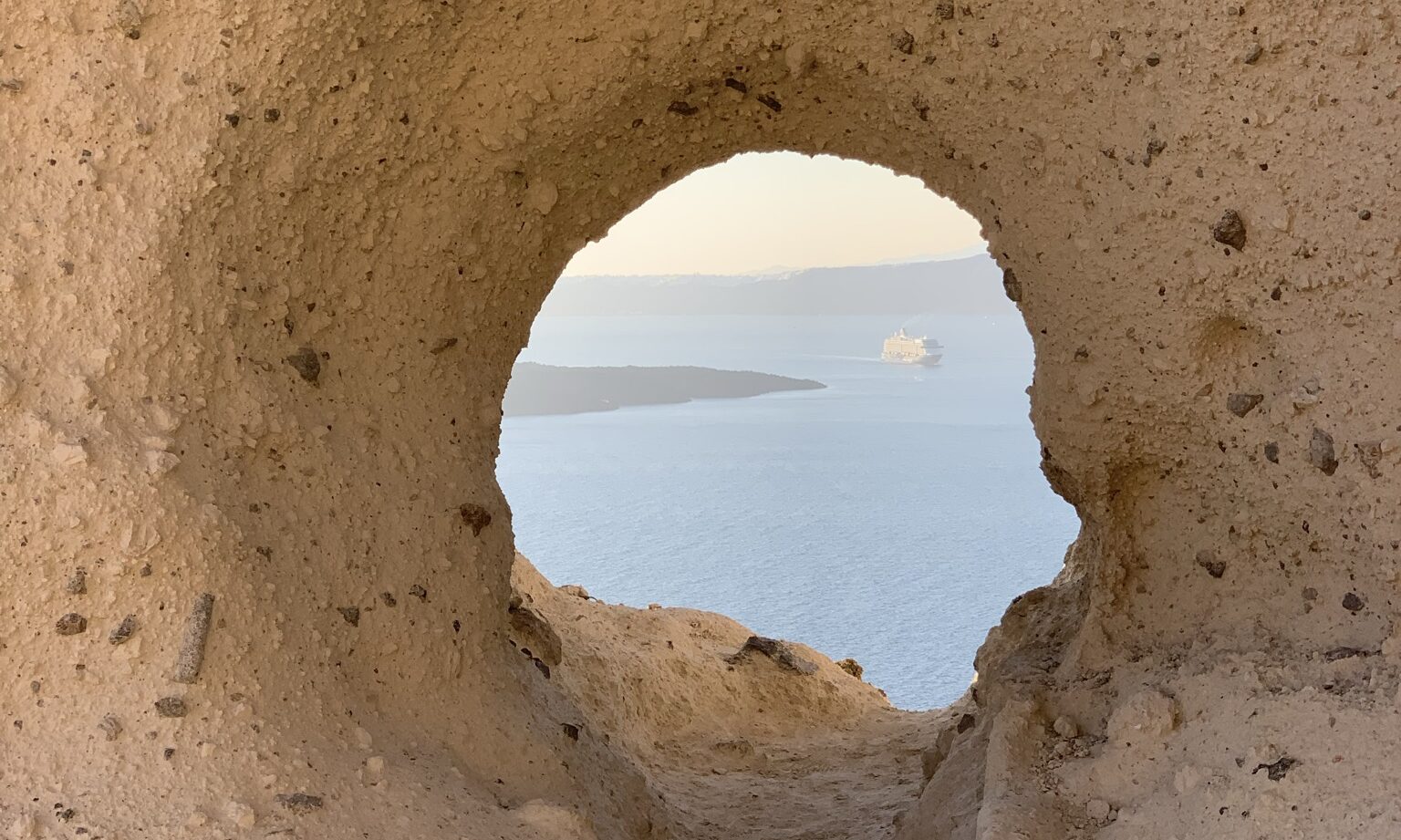
Carved naturally into the volcanic cliffs, the Heart of Santorini is a hidden viewpoint where a heart-shaped opening frames the endless blue of the Aegean Sea. Reached by a short walk near Megalochori, it offers a quiet, romantic setting away from busy spots. This unique formation has become a favorite for photos, sunset moments, and peaceful pauses surrounded by raw island beauty.
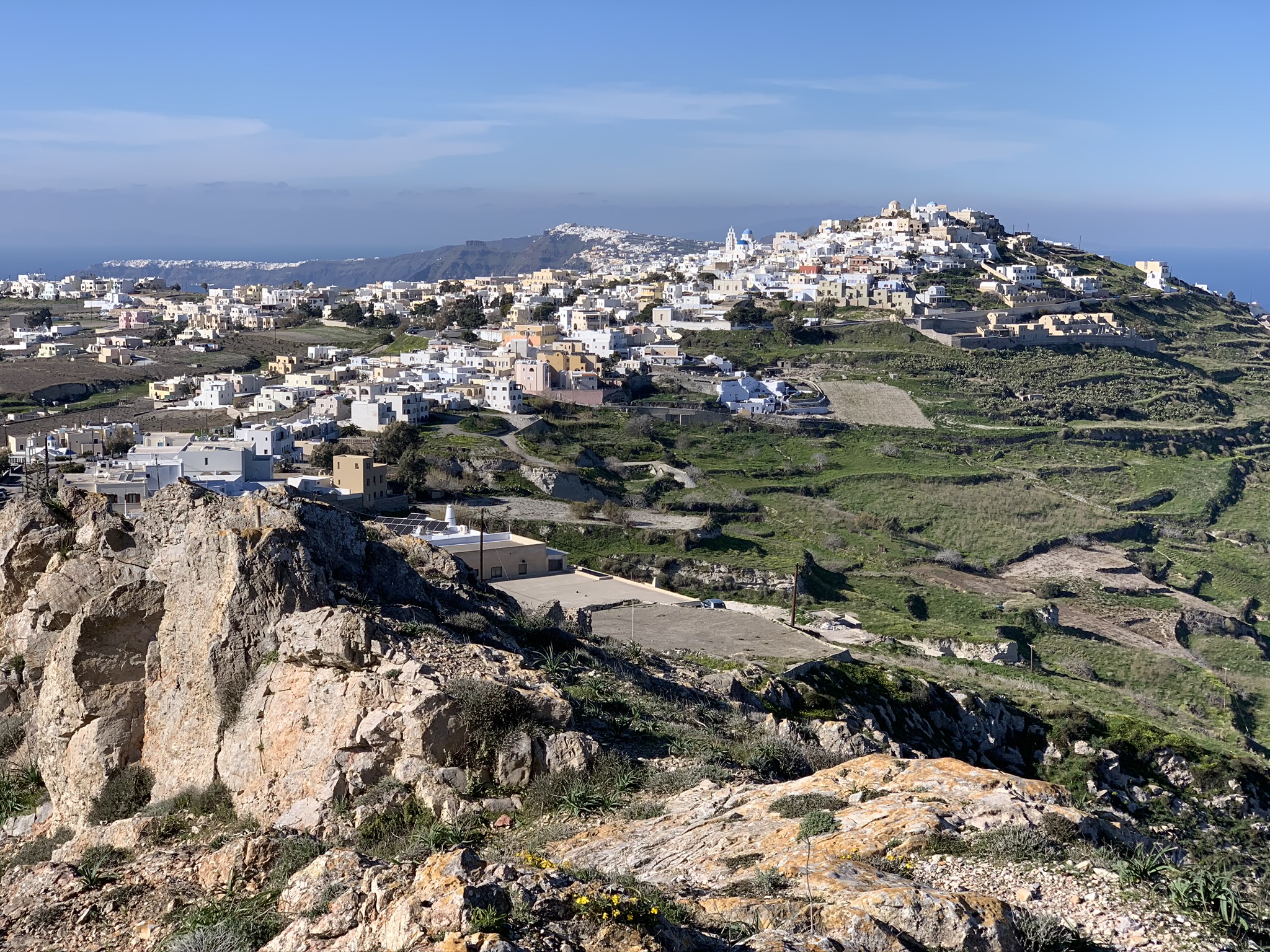
Santorini is a relatively small island in the southern Aegean Sea, formed by a volcanic caldera with a total land area of about 76 square kilometers (29 square miles). The island stretches roughly 18 kilometers (11 miles) from north to south and is characterized by steep cliffs, narrow villages, and dramatic views. Despite its compact size, Santorini’s varied terrain and numerous attractions.
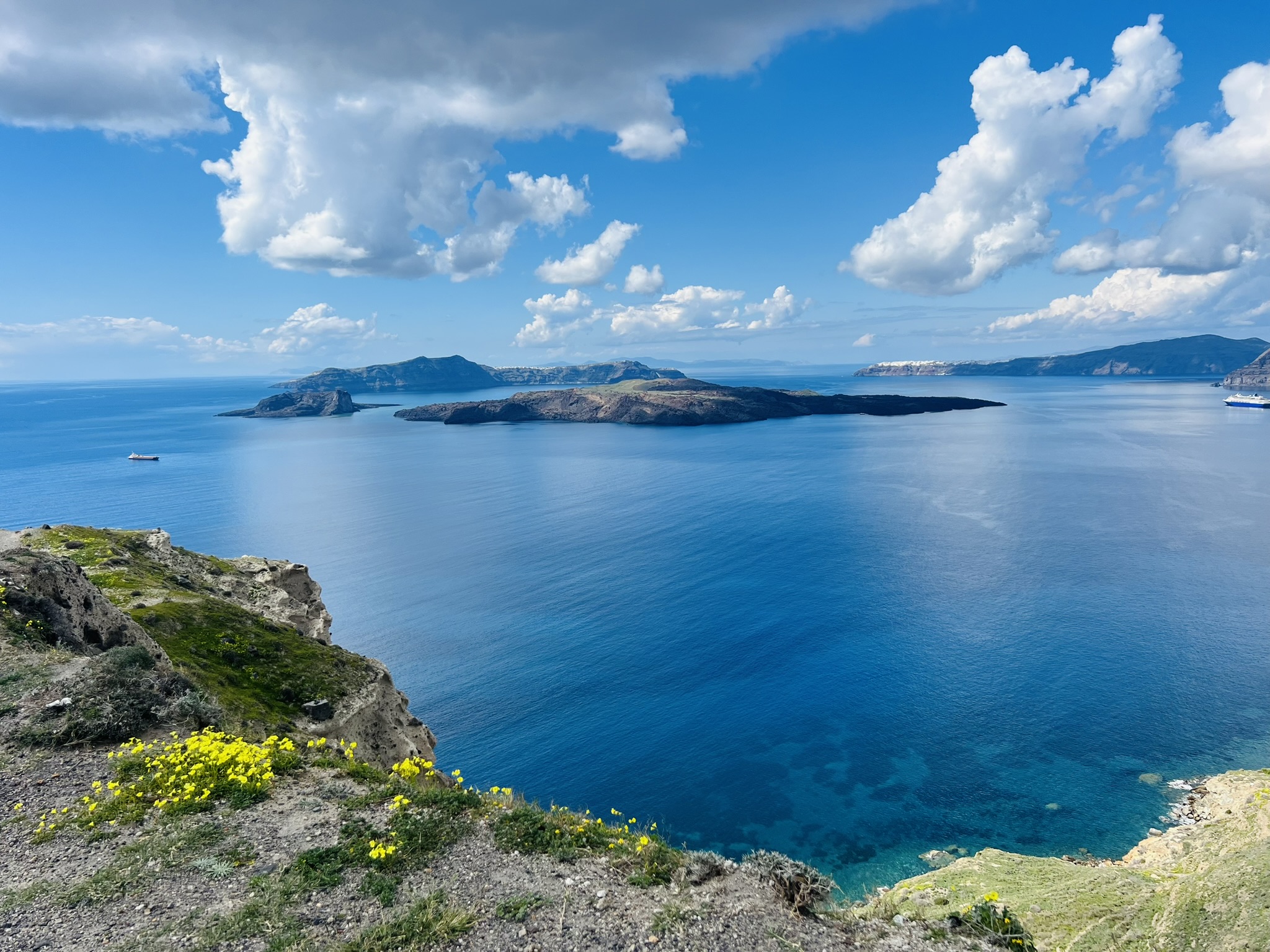
Santorini attracts millions of visitors each year, and with that attention come discussions about overtourism and its impact on local life, infrastructure, and the environment. Some criticisms focus on crowding in peak seasons, pressure on resources, and the balance between tourism and community wellbeing.
Santorini’s volcanic soil, strong winds, and intense sunlight create a unique environment for viticulture, producing wines with distinct mineral character and acidity. The island is especially known for its indigenous Assyrtiko grape, often grown in traditional basket-shaped vines to protect them from the wind.
Santorini stands out for its volcanic landscape and cliffside villages that overlook the caldera.
As you move between towns, you’ll notice how the island’s geography shapes everything—from viewpoints
and walking routes to where the best sunset spots naturally form.
Beyond the postcard scenery, daily life unfolds in small lanes filled with cafés, shops, and traditional tavernas.
Meanwhile, quiet corners and viewpoints appear just a few minutes away from the busiest streets, especially
outside peak hours.
The local kitchen is built around regional staples such as fava, capers, and sun-dried tomatoes, alongside fresh seafood.
In addition, Santorini’s volcanic soil supports distinctive vineyards—so a glass of Assyrtiko is often part of the experience.
For history, Akrotiri offers a look into a settlement preserved by volcanic ash, while museums in Fira add context to the island’s past.
Along the coast, volcanic beaches range from red cliffs to dark sand, so you can choose a shore that fits your mood and time.